
sales@sztimeast.com
+86-15989541416
In the ever-evolving world of medical device manufacturing, precision, speed,
and reliability are non-negotiable.
Manufacturers who support critical healthcare procedures, such as organ transplantation,
must not only meet high standards of performance but also ensure that every device is
produced to the highest levels of consistency.
Servo ultrasonic welding, a state-of-the-art bonding technology, has become a game-changer for
one medical device company that specializes in organ, tissue, and cell preservation solutions.
This advanced welding system is transforming their production line,ensuring that their devices
meet stringent regulatory standards while significantly enhancing efficiency and reliability.
The medical device company in question specializes in creating disposable sensors used
during ex vivo assessments, which are crucial to organ preservation and perfusion.
During these assessments, artificial blood is tested outside the human body to evaluate
its functionality before transplantation. These sensors continuously monitor critical parameters
like pH levels and gas concentration in the artificial blood, providing real-time data to ensure
optimal preservation conditions.
However, the production of these sensors comes with a number of challenges.
The most significant of these is assembling the tiny polycarbonate caps that
enclose the sensor’s internal components.
These caps are not just containers—they serve as the protective housing for three delicate,
medicated films that monitor the blood’s chemical composition. Any misalignment,
contamination, or damage to the films could result in inaccurate readings, compromising
the entire transplant process.
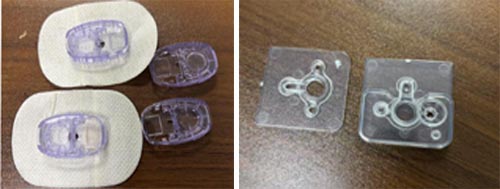
The need for precision in placing the films and ensuring a secure, contaminant-free
seal makes the sensor assembly process particularly challenging. The task becomes
even more difficult because of the small size of the components involved—every part
must align with micrometer-level accuracy to ensure the device functions as intended.
To tackle the challenges of assembling these highly sensitive disposable sensors,
the manufacturer turned to servo ultrasonic welding—a cutting-edge technology
that brings unmatched precision, speed, and reliability
to the assembly process.
How Ultrasonic Welding Works?
Ultrasonic welding uses high-frequency sound waves (much higher than what
we can hear) to generate vibrations in the materials being welded. These vibrations
cause the materials to vibrate rapidly, which generates localized heat right at the contact
point. This heat softens the surfaces of the materials, allowing them to melt and bond
together at a molecular level—all without any need for external heat sources.
This is a huge advantage, especially when dealing with delicate or temperature-sensitive
components,because the process is much gentler compared to traditional methods like heat sealing.
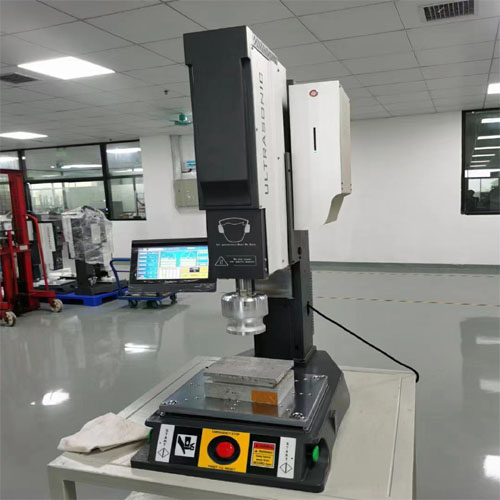
The game-changer here is the servo control technology integrated into the
ultrasonic welding system. Unlike traditional systems, which may offer basic pressure
and vibration, servo-controlled ultrasonic welding allows for precise adjustments
in both pressure and vibration. This means the manufacturer can fine-tune the process,
ensuring that each tiny cap is sealed consistently and accurately every time. This level
of control is essential when working with the small, intricate components like the
polycarbonate sensor caps.
The system's flexibility is also a major advantage. It can easily adjust to different
material types and varied sensor configurations, making it adaptable to the diverse range of
components that are required for the sensors. Whether it’s a smaller or larger part,
the ultrasonic welding system can handle it with ease, providing a customized solution
for each unique sensor assembly.
One of the key advantages of servo ultrasonic welding is its ability to protect sensitive
components during the assembly process. In this case, the polycarbonate caps contain three
medicated films that are crucial for monitoring the pH and gas levels in artificial blood.
These films are very delicate, and any damage during the sealing process could lead to
the malfunction of the entire sensor.
Ultrasonic welding allows for precise and gentle sealing, ensuring that the films are
not affected by heat damage or misalignment.
Since ultrasonic welding does not rely on traditional heating to melt the materials
(except for the localized heat generated by vibrations),
it eliminates the risk of overheating or damaging the sensitive films inside. As a result,
ultrasonic welding provides a strong and reliable seal,ensuring that the sensor works as
intended and avoiding any risk of contamination or malfunction.
This high level of precision not only protects the integrity of the sensors but also
ensures that the assembly process is consistent and repeatable—critical factors when
manufacturing medical devices. Each sensor must be sealed to exact specifications to
maintain the highest standards of safety and reliability—especially when the sensors
are being used in life-saving transplant procedures.
By adopting servo ultrasonic welding, the manufacturer ensures that every sensor is
sealed with precision, preserving the films inside and creating a reliable bond that’s
free of contaminants. This approach doesn’t just meet the demands of efficiency
but ensures that the quality of each device is upheld, leading to improved patient
outcomes in critical medical procedures.
Key Benefits of Servo Ultrasonic Welding
High Precision and Repeatability: One of the biggest advantages of servo ultrasonic
welding is its ability to maintain high precision across numerous production cycles.
Since medical devices must meet rigorous regulatory standards, the manufacturer cannot afford
any deviation from the prescribed specifications. The servo system controls pressure,
amplitude, and vibration speed, ensuring repeatable accuracy with each sensor assembly.
This level of control is vital when assembling components that affect the safety and functionality
of medical devices.
Increased Production Efficiency: Unlike traditional methods such as heat sealing,
which requires time to heat up and cool down, ultrasonic welding is a much faster process.
This is particularly valuable when dealing with delicate components. Since ultrasonic welding
doesn’t rely on external heat sources, it eliminates the downtime associated with preheating or cooling,
making it possible to perform multiple welds in rapid succession. As a result, the manufacturer
benefits from faster cycle times, improving throughput and reducing bottlenecks in the production line.
Enhanced Material Integrity: The ultrasonic welding process creates hermetic seals
—airtight, moisture-proof bonds that ensure the device remains free from contamination.
The precise nature of the weld means that the polycarbonate cap,
as well as the medicated films inside, are protected from any external contaminants
during assembly. Moreover, the process creates a bond that’s incredibly strong and durable, preventing any leakage or malfunction during use. This is especially crucial in medical
devices where the failure of one component can result in catastrophic consequences.
Reduced Waste and Energy Consumption: Servo ultrasonic welding operates with
significantly less energy consumption compared to traditional heat sealing methods.
Heat sealing requires constant heating and cooling of large metal bars, resulting in energy waste,
especially during idle times. In contrast, ultrasonic welding only uses energy when the machine
is actively bonding materials, which leads to lower overall energy usage. Additionally,
the precision of the welding process minimizes material waste, further improving the
manufacturer’s sustainability practices.
Outcome: Improved Quality, Efficiency, and Regulatory Compliance
Since implementing servo ultrasonic welding in their production line, the medical device
company has seen substantial improvements in both efficiency and product quality.
By speeding up the sensor assembly process and ensuring each device is welded with
the utmost precision, the company has significantly reduced production time while improving
quality consistency. This not only enhances the manufacturer’s bottom line but also allows
them to meet the increasing demand for their critical devices.
Furthermore, the precision of the ultrasonic welding process ensures that every sensor is
manufactured to meet the highest regulatory standards set by medical authorities.
Since ultrasonic welding doesn’t expose the materials to excessive heat, it ensures that
delicate materials, such as the medicated films, remain undamaged and functional
throughout the process. This has helped the company maintain a strong track record
of producing reliable, high-performance devices.
Conclusion: A Leap Forward in Medical Device Manufacturing
The integration of servo ultrasonic welding has proven to be a trans formative
solution for the medical device manufacturer. The technology has allowed the
company to streamline its operations, improve production efficiency, and
enhance the reliabilityof its disposable sensors. This partnership between
the ultrasonic welding manufacturer and the medical device company is
a prime example of how innovative welding technology can drive improvements
in manufacturing processes while ensuring
the safety and functionality of life-saving medical devices.
As medical technology continues to advance, the adoption of cutting-edge technologies
like servo ultrasonic welding will play an increasingly important role in improving
the precision, efficiency, and sustainability of medical device manufacturing.
With the success of organ transplantation and other critical healthcare procedures
often depending on the performance of these devices, innovations in manufacturing
are essential to enhancing patient outcomes and supporting the future of healthcare.
Phone: +86-15989541416
E-mail: sales@sztimeast.com
Whatsapp:+86-15989541416
Add: Building 5, Huixin Intelligent Industrial Park,Guangming, Shenzhen,China 518107
We chat