
sales@sztimeast.com
+86-15989541416
Introduction
Ultrasonic welding has become a critical joining technology in the medical industry,
especially for applications involving filters, membranes, and nonwoven materials.
These components are widely used in medical devices that require high levels of
cleanliness, precision, and reliability.
Typical applications include:
respiratory filtration systems
IV and liquid filters
surgical masks and protective clothing
diagnostic and laboratory devices
Unlike traditional bonding methods such as adhesives or thermal bonding, ultrasonic
welding offers a clean, fast, and contamination-free solution. It eliminates the need
for additional materials and reduces the risk of chemical contamination, which
is essential in medical environments.
However, welding medical materials presents unique challenges due to their delicate
structures and strict regulatory requirements. This article explains how ultrasonic
welding is applied to medical filters, membranes, and nonwoven materials, and how
manufacturers can optimize the process for reliable and scalable production.
Medical manufacturing demands extremely high standards in terms of hygiene,
consistency, and product performance. Ultrasonic welding meets these requirements
better than many traditional joining technologies.
Key advantages include:
Clean and contamination-free process
Ultrasonic welding does not require adhesives, solvents, or additional bonding agents.
This ensures that no foreign substances are introduced into the medical product.
High precision and repeatability
The process allows precise control of welding parameters such as amplitude, pressure,
and time. This results in consistent weld quality across large production volumes.
Fast production cycle
Ultrasonic welding typically takes less than one second per cycle, making it suitable
for high-volume medical manufacturing.
Compatibility with automation
Ultrasonic welding systems can be easily integrated into automated production lines,
ensuring stable and efficient manufacturing.
Medical filters are one of the most important applications of ultrasonic welding.
These filters are used in:
respiratory protection systems
intravenous (IV) filtration
dialysis equipment
laboratory filtration systems
In these applications, filters must provide:
airtight sealing
high filtration efficiency
structural integrity
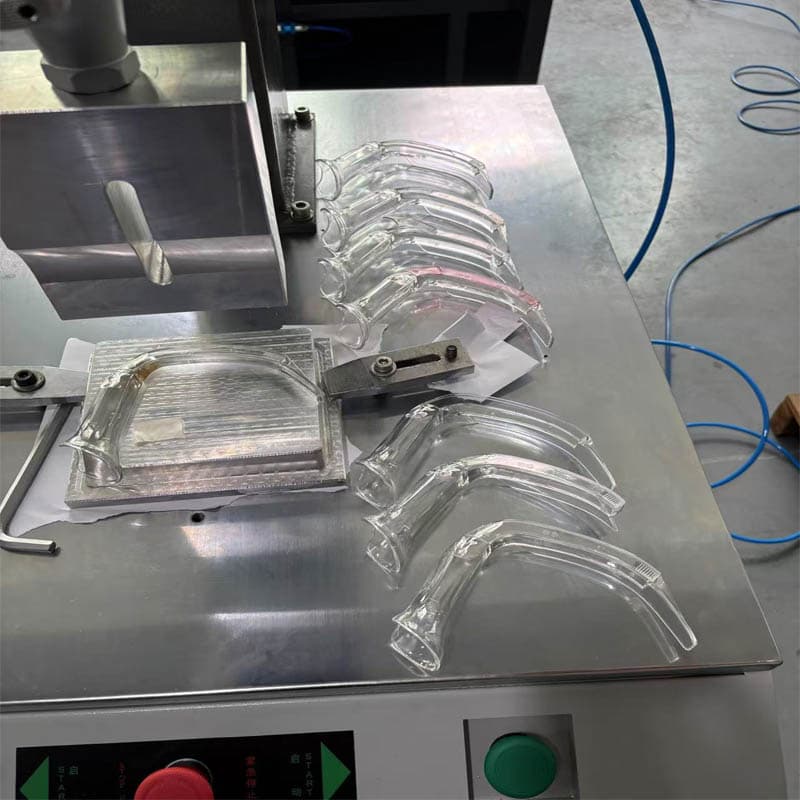
Ultrasonic welding ensures that the filter housing and membrane are securely bonded
without damaging the filtration material.
Key benefits for filter applications
precise sealing without leakage
minimal thermal impact on filter media
improved production efficiency
Medical membranes are typically thin, porous, and highly sensitive to heat and pressure.
These materials require special attention during ultrasonic welding.
Common membrane materials include:
PTFE (polytetrafluoroethylene)
PE (polyethylene)
PP (polypropylene)
multilayer composite membranes
Challenges in membrane welding
risk of pore collapse
deformation under pressure
uneven energy distribution
Ultrasonic welding provides localized heating, allowing precise bonding without affecting
the entire membrane structure.
Best practices
use lower amplitude settings
optimize pressure to avoid deformation
design proper support fixtures
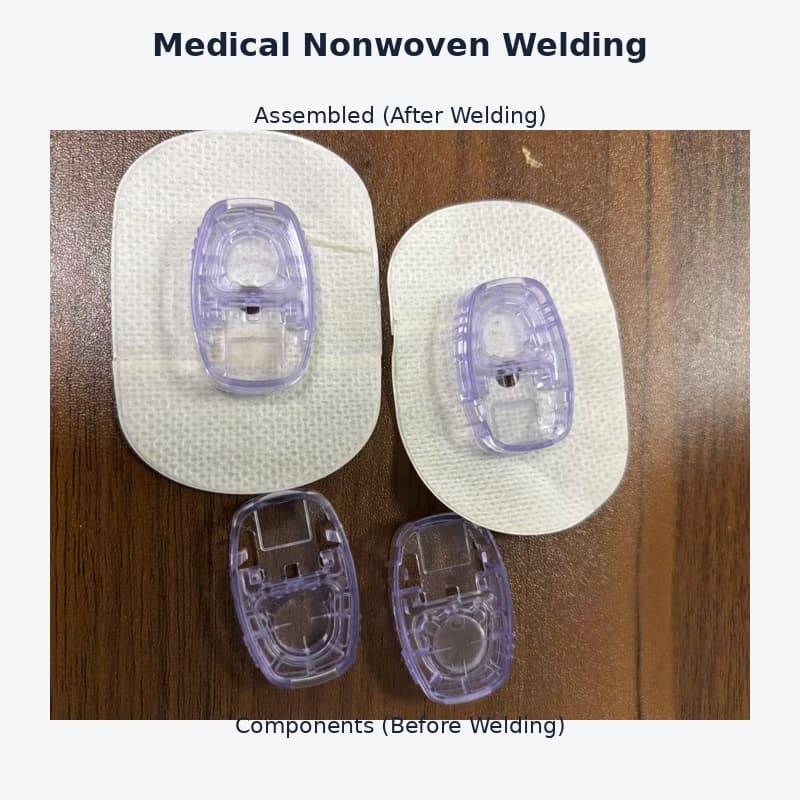
Nonwoven materials are widely used in disposable medical products.
Applications include:
surgical masks
protective gowns
medical wipes
sterile packaging
Ultrasonic welding is particularly suitable for these materials because it bonds fibers directly
through high-frequency vibration.
Advantages for nonwoven materials
no need for adhesives
maintains breathability
soft bonding without damaging fibers
high-speed production capability
Typical welding processes
spot welding
seam welding
edge sealing
Despite its advantages, ultrasonic welding in medical applications presents several challenges.
Material variability
Medical materials often vary in thickness and composition, affecting welding performance.
Thin and fragile structures
Many medical components are delicate and prone to damage during welding.
Strict quality standards
Medical products must meet stringent regulatory requirements, including:
FDA compliance
ISO standards
biocompatibility requirements
Common defects
incomplete sealing
stress whitening
cracking
burn marks
To achieve reliable results, manufacturers must optimize the ultrasonic welding process.
1. Parameter optimization
Key parameters include:
amplitude
welding time
pressure
hold time
Fine-tuning these parameters ensures optimal energy transfer.
2. Tooling and horn design
The ultrasonic horn must be designed to:
distribute energy evenly
avoid damaging sensitive materials
3. Fixture design
Proper fixtures ensure:
part alignment
consistent pressure distribution
4. Material selection
best plastics for ultrasonic welding
Due to the complexity of medical materials, validation is essential before production.
Sample testing helps manufacturers:
verify weld strength
test sealing performance
evaluate product durability
optimize welding parameters
Without testing, manufacturers risk:
production failure
product rejection
regulatory issues
ultrasonic welding sample testing
Choosing the correct ultrasonic welding machine is critical for medical applications.
Important factors include:
precision control
stability
repeatability
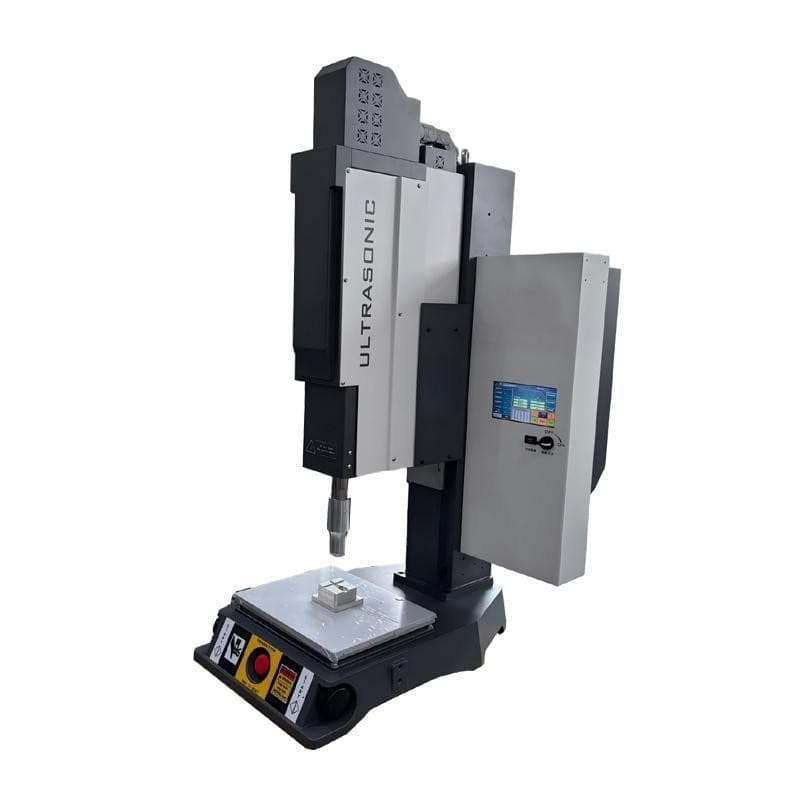
Servo ultrasonic welding systems are widely used due to their advanced control capabilities.
servo ultrasonic plastic welding machine
As medical technology advances, ultrasonic welding continues to evolve.
Key trends include:
increased automation
higher precision systems
integration with smart manufacturing
development of new medical materials
These trends will further expand the use of ultrasonic welding in the medical field.
Ultrasonic welding provides a clean, efficient, and reliable solution for joining medical filters,
membranes, and nonwoven materials.
By optimizing process parameters, improving joint design, and conducting proper sample testing,
manufacturers can ensure high-quality and compliant medical products.
Phone: +86-15989541416
E-mail: sales@sztimeast.com
Whatsapp:+86-15989541416
Add: Building 5, Huixin Intelligent Industrial Park,Guangming, Shenzhen,China 518107
We chat