Introduction
Ultrasonic welding is widely used to join thermoplastic components in industries
such as automotive manufacturing, medical devices, consumer electronics, and
packaging.However, not all plastics behave the same during ultrasonic welding.
The weldability of a plastic material depends on factors such as its melting
temperature, molecular structure, and stiffness. Selecting the right material is
essential to achieve strong welds, consistent production quality, and reliable
sealing performance.
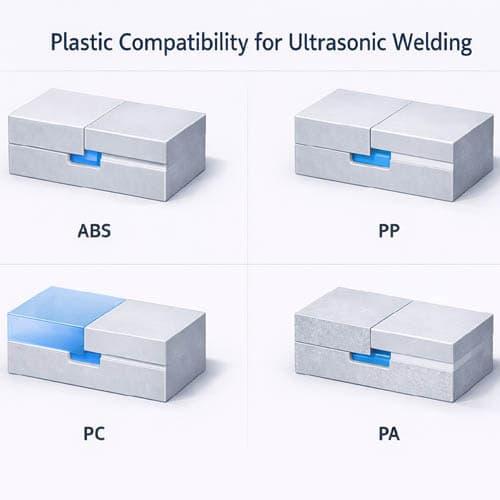
In this article, we explore the most common plastics used in ultrasonic welding
—including ABS, polypropylene (PP), polycarbonate (PC), and nylon (PA)—
and explain how material properties influence welding performance.
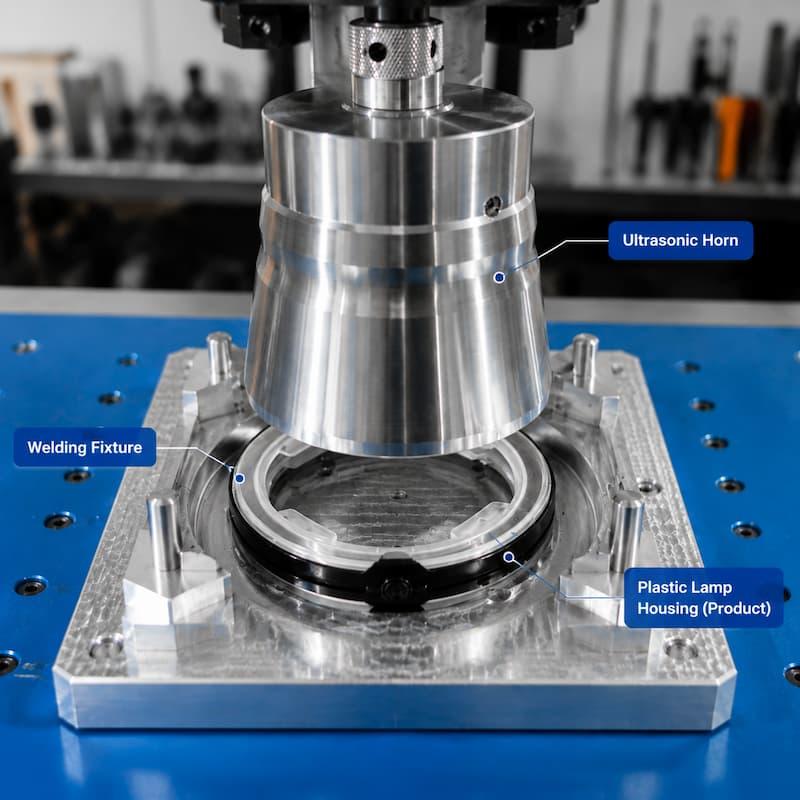
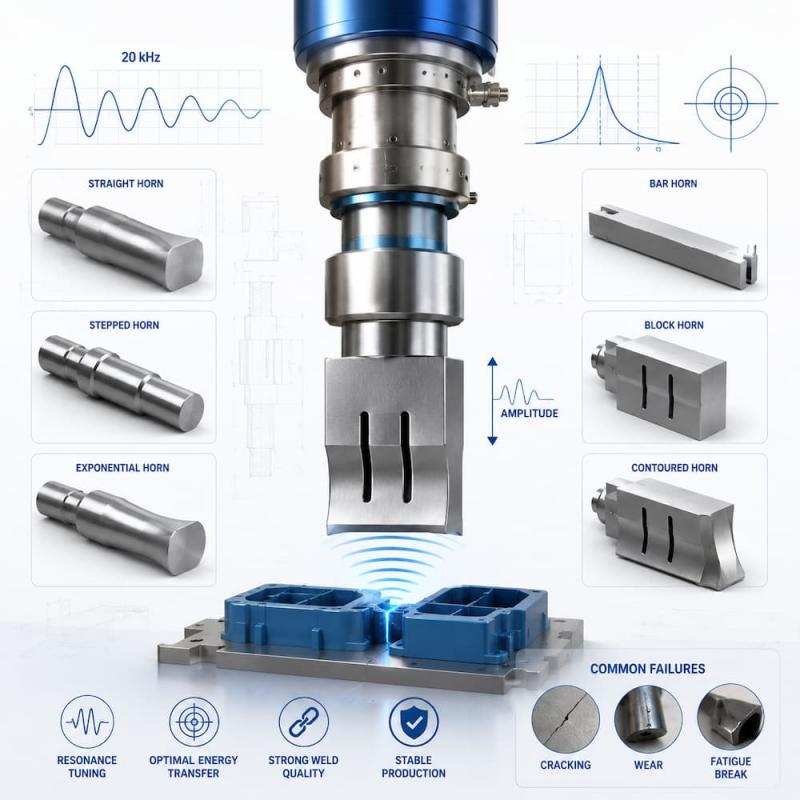
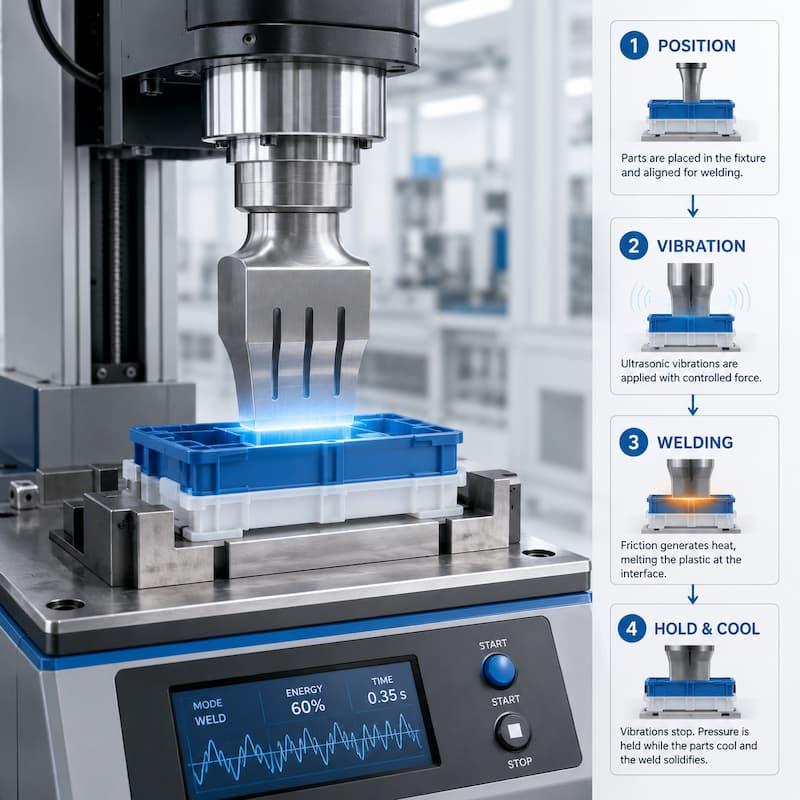
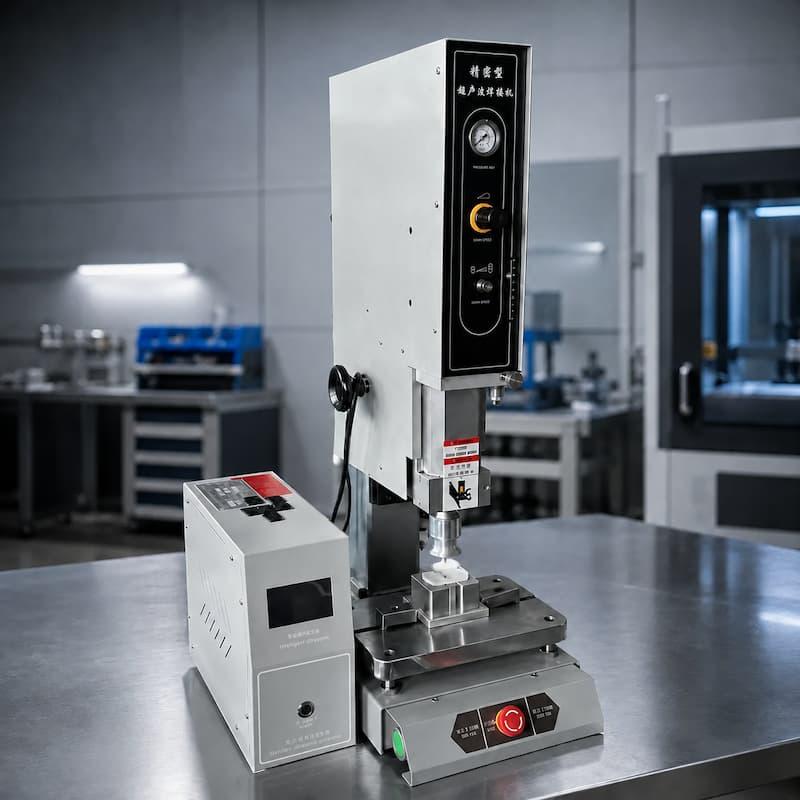
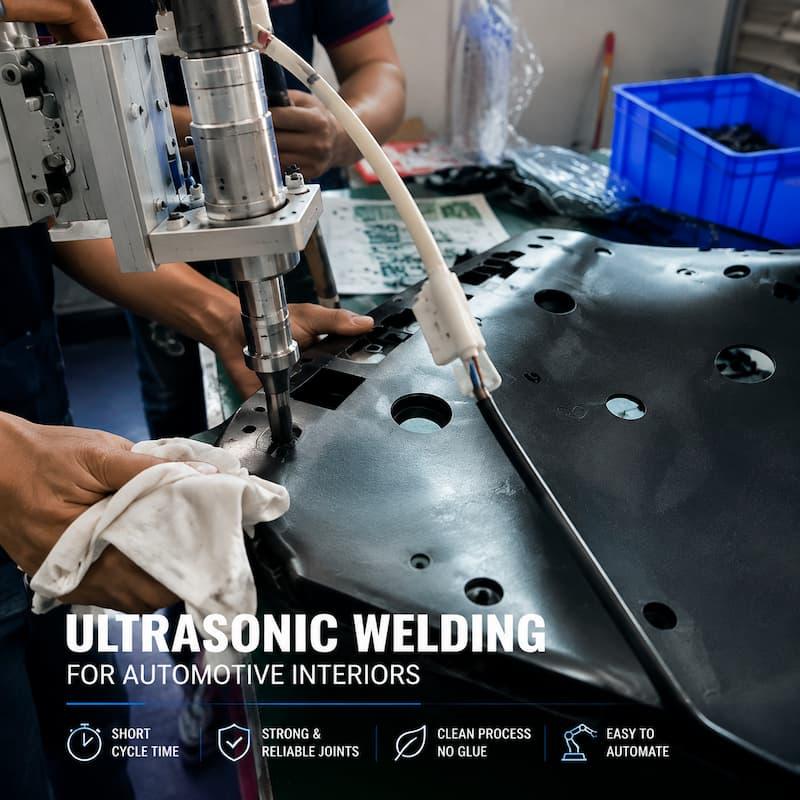
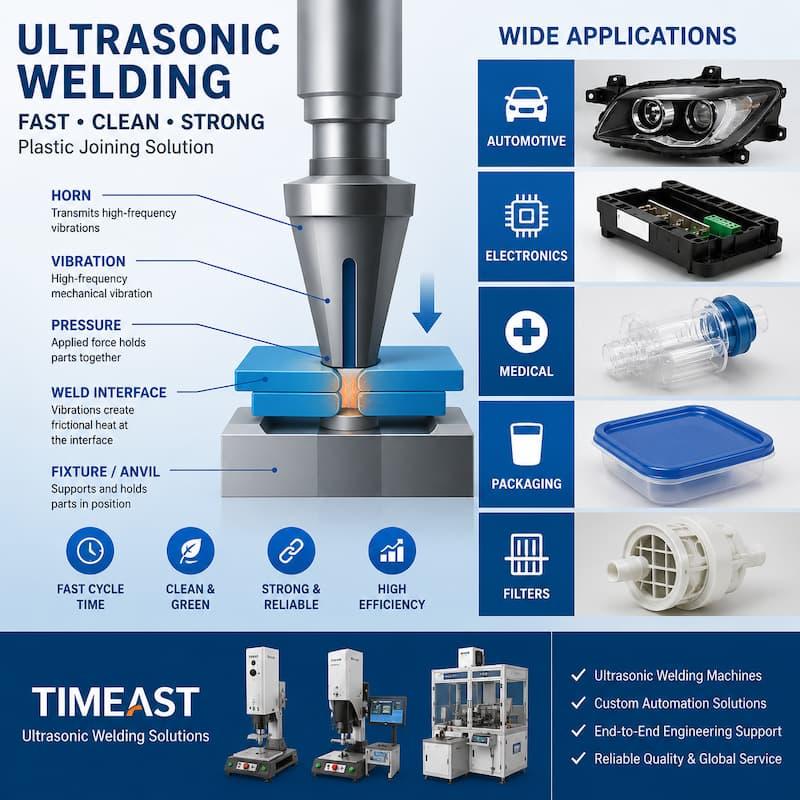
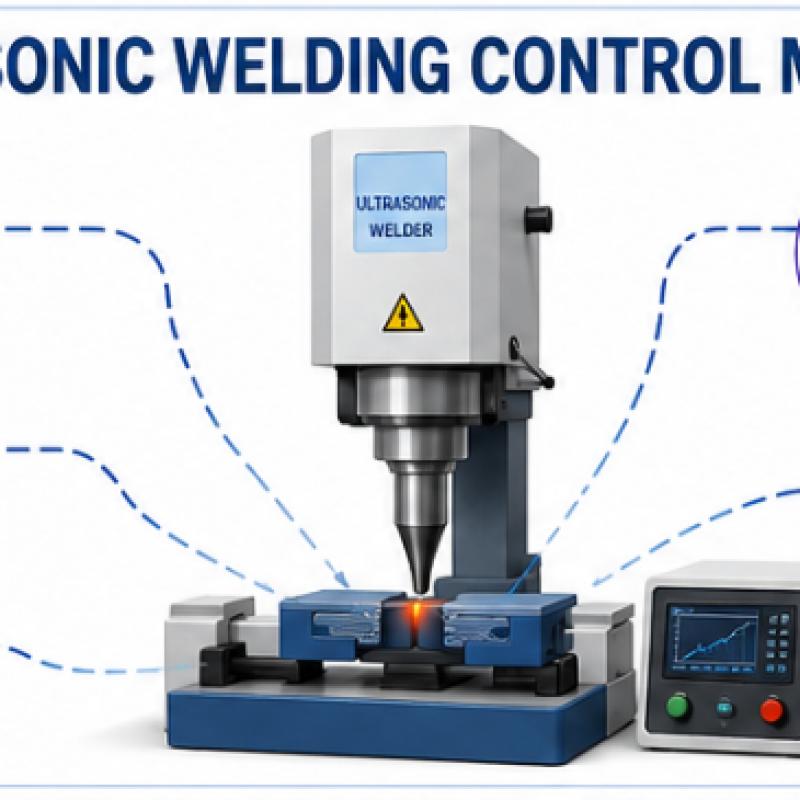
Ultrasonic welding works by applying high-frequency mechanical vibrations
that generate frictional heat at the interface of two plastic parts.
When the temperature reaches the material’s melting point, the plastic
softens and forms a molecular bond as it cools.
Different plastics respond differently to ultrasonic energy.
Material properties that influence welding include:
melting temperature
stiffness and modulus
molecular structure (amorphous vs semi-crystalline)
thermal conductivity
In general, amorphous plastics are easier to weld than semi-crystalline plastics
because they melt over a wider temperature range.

Acrylonitrile Butadiene Styrene (ABS) is one of the most commonly used materials
for ultrasonic welding.
Why ABS welds well
ABS is an amorphous plastic, meaning it softens gradually when heated. This property
allows ultrasonic energy to concentrate effectively at the weld interface.
Advantages include:
excellent weld strength
consistent welding performance
low energy requirement
Typical applications
ABS ultrasonic welding is widely used for:
electronic housings
automotive interior components
consumer appliances
Because of its reliable weldability, ABS is often recommended for new
ultrasonic welding applications.

Polypropylene is a semi-crystalline plastic, which means it melts abruptly rather than
gradually.This characteristic makes PP more difficult to weld compared with
amorphous plastics.
Challenges of welding PP
Common issues include:
lower energy absorption
narrow melting range
reduced weld strength
How to improve PP welding
Successful PP welding usually requires:
optimized joint design
higher welding amplitude
precise process control
Despite these challenges, polypropylene is commonly used in:
automotive components
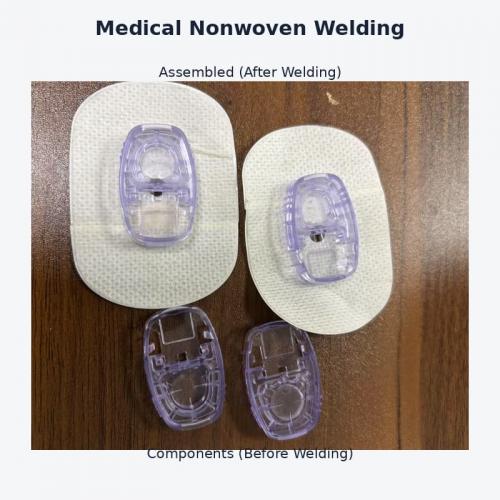
medical disposables
packaging products

Polycarbonate is another amorphous thermoplastic with excellent ultrasonic welding
performance.PC offers:
high stiffness
strong molecular bonding
consistent melting behavior
Applications
Polycarbonate ultrasonic welding is commonly used in:
medical device housings
lighting components
electronic enclosures
PC is often selected when high strength and durability are required.

Nylon (polyamide) is a semi-crystalline material that can be welded ultrasonically,
but the process requires careful control.
Challenges include:
moisture sensitivity
higher melting temperature
energy absorption variation
For successful welding, nylon parts often require:
proper material drying
optimized joint design
controlled welding parameters
Nylon ultrasonic welding is commonly used in:
automotive under-hood components
mechanical assemblies
industrial connectors
Besides ABS, PP, PC, and nylon, several other thermoplastics can also be welded ultrasonically.
Examples include:
Polystyrene (PS)
excellent weldability
commonly used in consumer products
Acrylic (PMMA)
good welding performance
suitable for transparent components
PET
moderate welding performance
used in packaging and consumer electronics
Material compatibility testing is often recommended before selecting the final manufacturing process.
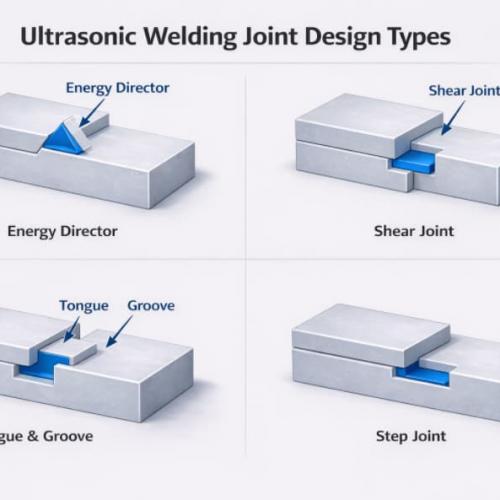
Even if a plastic material is suitable for ultrasonic welding, the joint design plays a critical role in
determining final weld strength.
Common joint designs include:
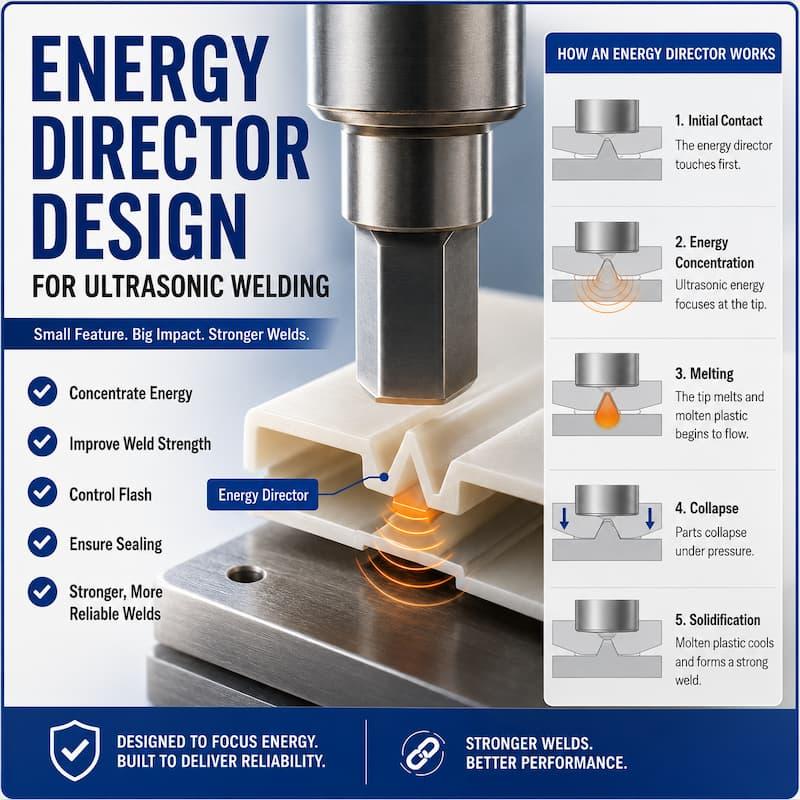
energy director joints
shear joints
tongue and groove joints
Proper design helps concentrate ultrasonic energy at the weld interface and ensures consistent
melting behavior.
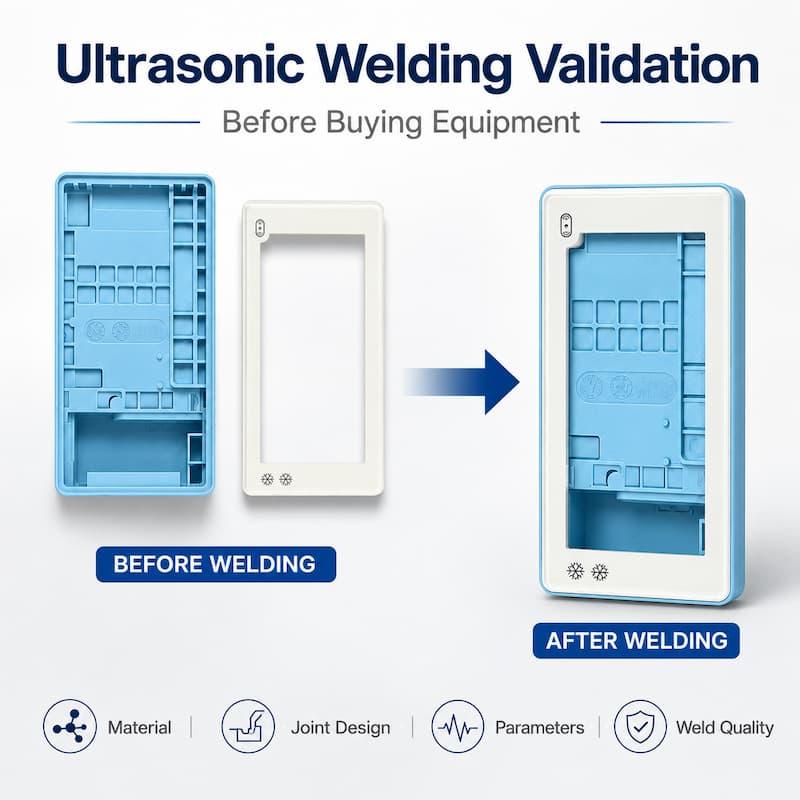
Because plastic formulations vary between manufacturers, welding performance may differ
even for the same material type.For this reason, many manufacturers perform sample welding
tests before selecting ultrasonic welding equipment.
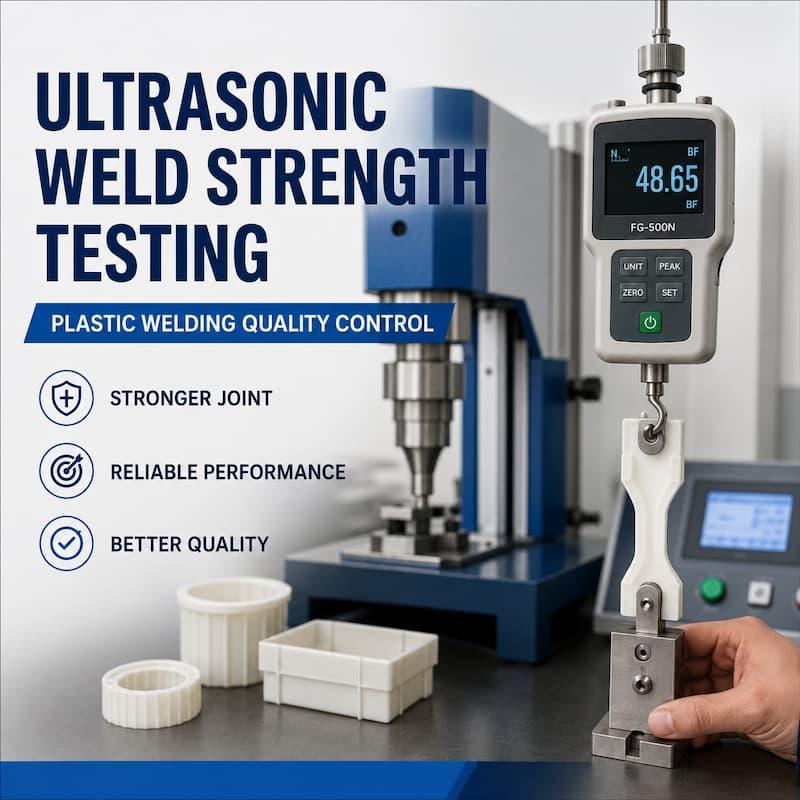
Professional testing can evaluate:
weld strength
sealing performance
production feasibility
TIMEAST provides ultrasonic welding sample testing services to help manufacturers verify
material compatibility and optimize welding parameters.
Send your plastic samples for ultrasonic welding testing.
Choosing the right plastic material is one of the most important factors in achieving successful
ultrasonic welding.Amorphous plastics such as ABS and polycarbonate
generally offer the best welding performance, while semi-crystalline plastics like polypropylene
and nylon require more careful process control.
By selecting appropriate materials, designing proper joints, and validating the welding process
through sample testing, manufacturers can achieve strong, reliable, and repeatable ultrasonic welds.
Related Article
Phone: +86-15989541416
E-mail: michael@sztimeast.com
Whatsapp:+86-15989541416
Add: 3/F, Building 5,Huixin Intelligent Industrial Park, Xinhu, Guangming, Shenzhen,China 518107