
sales@sztimeast.com
+86-15989541416
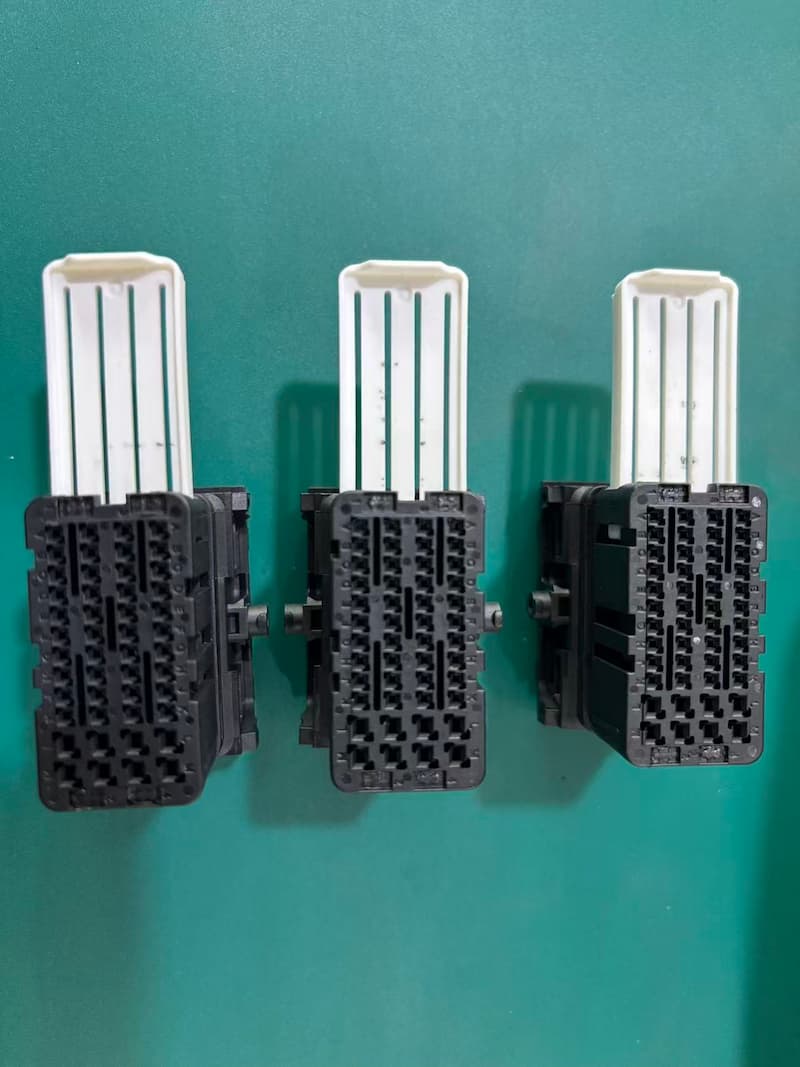
A Tier-level automotive component supplier was producing white plastic connector parts with strict
appearance requirements.
However, during ultrasonic welding:
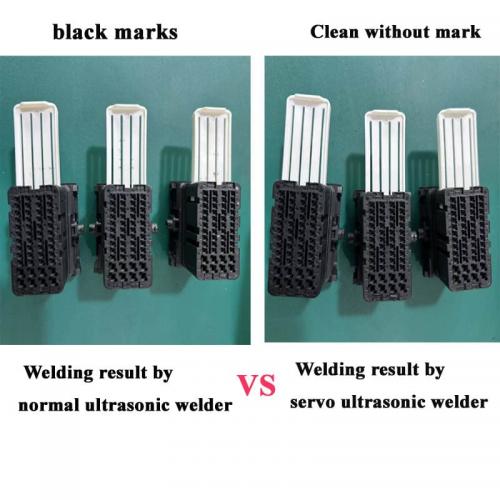
Black marks appeared on the surface
Defects increased during continuous production
Multiple machines failed to meet quality standards
Result: Products could not pass OEM inspection.
After evaluating the welding process, several factors contributing to black marks were identified:
Excessive localized heat generation during welding
Inconsistent pressure control from the pneumatic system
Material friction at the energy director
Limited process repeatability
These factors caused slight material degradation on the white plastic surface, resulting in visible discoloration.
Ultrasonic Welding Process Video
The following video demonstrates the optimized welding process using the servo ultrasonic welding system.
The final welded component achieves a clean surface appearance without black marks while maintaining
reliable welding quality.
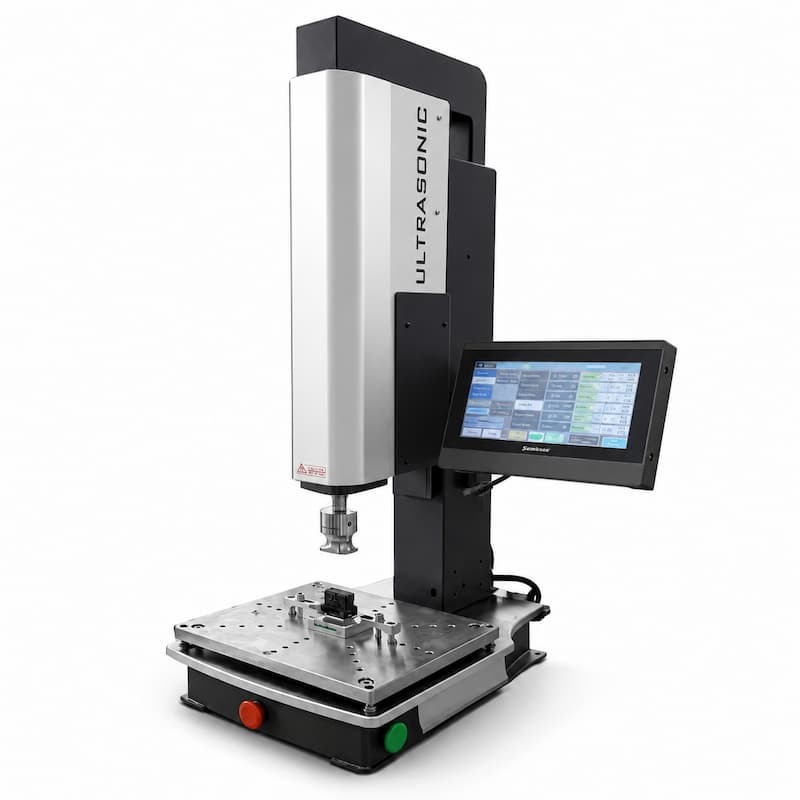
To eliminate the black marks, TIMEAST implemented a servo-driven ultrasonic welding system operating at 35kHz.
Compared with the previous pneumatic setup, the servo system provided:
• More accurate pressure control
• Stable welding speed
• Precise collapse distance monitoring
• Better energy consistency
The optimized welding profile reduced excessive heat buildup while maintaining required weld strength.
| Item | Before Optimization | After Optimization |
| Surface Appearance | Black Marks Visible | Clean Surface |
| Pressure Control | Pneumatic | Servo Controlled |
| Process Stability | Moderate | High |
| Product Consistency | Variable | Consistent |
| Customer Acceptance | Low | Approved |
After implementing the optimized welding solution:
Black marks were successfully eliminated
Product appearance met customer requirements
Welding consistency improved
Production stability increased
The customer approved the welding process for mass production
Q1. Why do black marks occur during ultrasonic welding?
A: Black marks are usually caused by excessive localized heat, unstable pressure, improper welding parameters,
or material degradation during the welding process. White and light-colored plastic parts are particularly
sensitive to these surface defects.
Q2. Can servo ultrasonic welding prevent burn marks?
A: Servo ultrasonic welding provides more precise control of pressure, speed, and collapse distance. This helps
reduce excessive heat generation and significantly lowers the risk of burn marks and surface discoloration.
Q3. Is 35kHz better than 20kHz for cosmetic plastic parts?
A: For small and appearance-sensitive plastic components, 35kHz ultrasonic welding often provides more refined
energy delivery and lower amplitude, helping achieve cleaner weld surfaces and improved cosmetic quality.
Q4. Which plastic materials are sensitive to discoloration?
A: White or light-colored materials such as ABS, PC, PC/ABS, and certain engineering plastics are more likely to
show discoloration, burn marks, or surface defects if welding parameters are not properly optimized.
Q5. How can welding pressure affect product appearance?
A: Excessive or unstable welding pressure can increase friction and heat generation, leading to surface defects.
Proper pressure control helps improve weld consistency and maintain a clean product appearance.
Phone: +86-15989541416
E-mail: sales@sztimeast.com
Whatsapp:+86-15989541416
Add: Building 5, Huixin Intelligent Industrial Park,Guangming, Shenzhen,China 518107
We chat