
sales@sztimeast.com
+86-15989541416
Introduction
Ultrasonic welding is widely used to join thermoplastic parts in industries such as
automotive, medical devices, electronics, and packaging.
However, successful welding does not only depend on the welding machine.
The design of the plastic joint is equally important.
A properly designed ultrasonic welding joint ensures strong bonding, consistent weld quality,
and reliable sealing performance.In this guide, we explain the most common ultrasonic
welding joint designs and how to select the right structure for your plastic parts.
In ultrasonic plastic welding, high-frequency vibrations generate frictional heat at
the interface of two plastic parts.This heat melts the plastic locally and forms a molecular
bond after cooling.If the joint is not designed correctly, several problems may occur:
weak weld strength
excessive flash
cosmetic defects
poor sealing performance
Therefore, engineers usually design specific welding features in the plastic parts to
control energy concentration during welding.
| Joint Type | Best for | Sealing | Appearance | Typical Plastics |
| Energy director | General assembly | Medium | Good | ABS,PC,PS |
| Shear joint | Airtight products | Excellent | Good | PP,PE,PA |
| Step joint | Cosmetic housings | Medium | Excellent | ABS,PC |
| Tongue and groove | Alignment and flash control | Good | Excellent | Multiple Material |
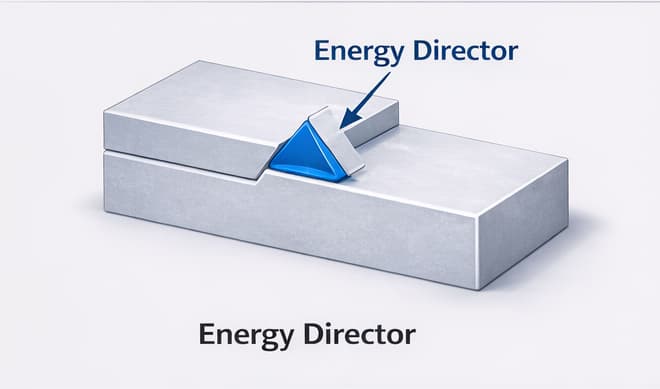
Energy directors are the most common joint design used in ultrasonic welding.
They are small triangular ridges molded into the plastic surface. During welding,
the ultrasonic energy concentrates on the tip of the triangle, causing it to melt first
and form the bond.
Advantages
fast welding cycle
consistent energy concentration
suitable for amorphous plastics such as ABS and PC
Typical Dimensions
angle: 60° or 90°
height: 0.25–0.5 mm depending on part size
Energy directors are widely used in consumer electronics housings and medical
plastic parts.
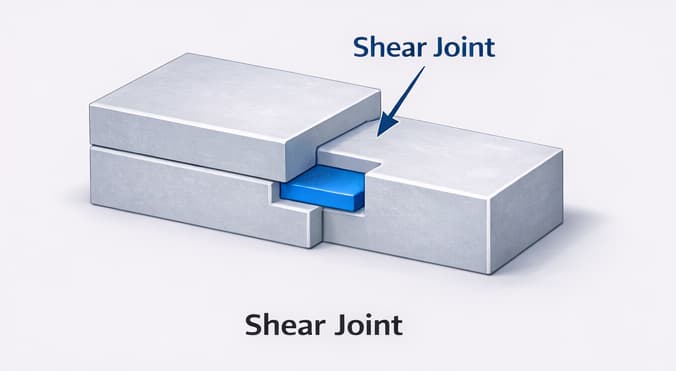
Shear joints are commonly used for cylindrical or rectangular parts requiring high
strength and airtight sealing.Instead of a triangular energy director, one wall slides
into the other during welding. The friction between the surfaces generates heat and
melts the plastic.
Advantages
very strong weld
excellent sealing performance
suitable for pressurized components
Applications
automotive plastic housings
medical fluid containers
airtight enclosures
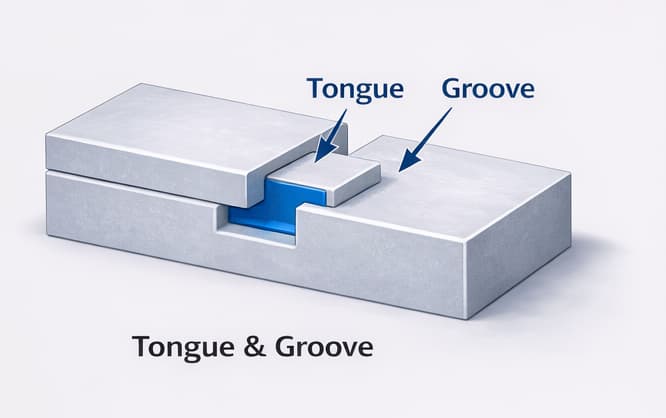
Tongue and groove joints are designed to align plastic parts precisely during assembly.
The tongue structure fits into the groove, ensuring proper positioning before welding begins.
Advantages
improved alignment
reduced flash
better appearance
This design is often combined with energy directors for improved welding reliability.
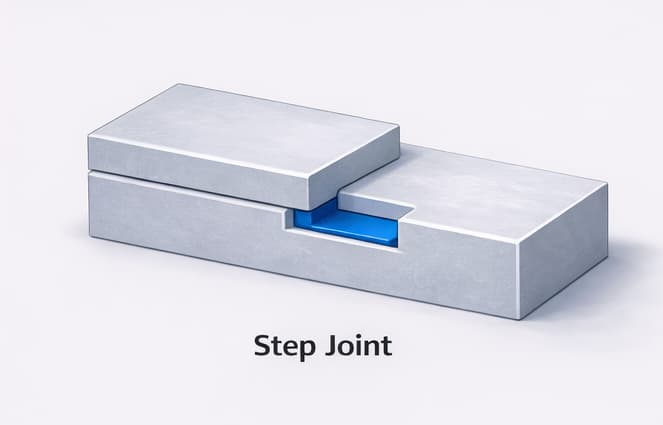
Step joints create a stepped interface between two plastic parts.
This design helps hide weld flash and improves cosmetic appearance.
Advantages
better product aesthetics
improved structural stability
Typical Applications
consumer electronics
medical device housings
Several factors influence joint design selection:
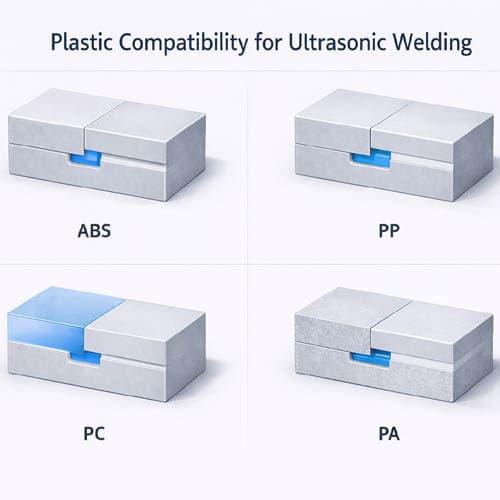
Different plastics melt differently during ultrasonic welding.
For example:
ABS – very suitable
PC – good welding performance
PP – requires careful design
Thicker parts may require larger energy directors or shear joints.
Products requiring airtight or waterproof performance usually use shear joints or
tongue-and-groove structures.
Even with a well-designed joint, actual welding results depend on material properties,
part geometry, and welding parameters.
Therefore, many manufacturers perform sample welding tests before purchasing ultrasonic
welding equipment.
TIMEAST provides professional ultrasonic welding sample testing services to evaluate
weld strength, sealing performance, and production feasibility.
Depending on part size and production requirements, different ultrasonic welding machines
may be used.
Proper joint design is essential for successful ultrasonic welding.
By selecting the right structure—such as energy directors, shear joints, or tongue-and-groove designs
—manufacturers can improve weld strength, product reliability, and production efficiency.
Before mass production, sample testing is recommended to verify welding feasibility and optimize
process parameters.
Get a Quote→
Phone: +86-15989541416
E-mail: sales@sztimeast.com
Whatsapp:+86-15989541416
Add: Building 5, Huixin Intelligent Industrial Park,Guangming, Shenzhen,China 518107
We chat